Research

Part of the AI piece we are struggling with is that students can’t research.

Honestly, the research piece they struggle with is the same struggle over a lot of their lives. It is the inability to do iterative work. When you write, you need to know how to make a draft and then edit. When you create art, you need to work on fundamentals over and over. You have to draw draw draw.

Research is the same. You have to be willing to follow the same steps in several different places. We have made life so easy, that the thought of doing something over again seems daunting.

But the process is important and the slightest change of word can mean a world of difference.

I learned to do this work when we used books and when databases charged by the query. We had to learn to be efficient. But we planned our iterations down to the last keystroke, because we also had to be thorough.

For a long time now a keystroke got you encyclopedic knowledge, but that is changing. AI is making things messy and harder and we have to get back to teaching the basics.

Okay, you found this item. Can you trust it? What do you need to do next to figure that out? How about the next item? What is the medium? Who made it? What is their bias?

It’s hard to face the facts that the internet is largely AI slop, but it is, and we have to address it in our information teaching.
Boring

We have been talking a lot about AI at work. How and why it could be implemented. Ethical issues. How to enforce the non use. How to encourage it in other places.

My initial response is that I am so bored by it all. I feel like most AI is obvious, though not all. AI writing sounds unnatural and AI images all have that weird Thomas Kinkade light.

There are a couple of people in my Facebook feed who seem to love those images. They pair them with AI feelgood stories and I am left empty. The old gentleman in the picture with a cap crumpled in his hand makes me think of pod people. The story reminds me of the stories Winston Smith recounts in 1984. Made by machine for the masses.

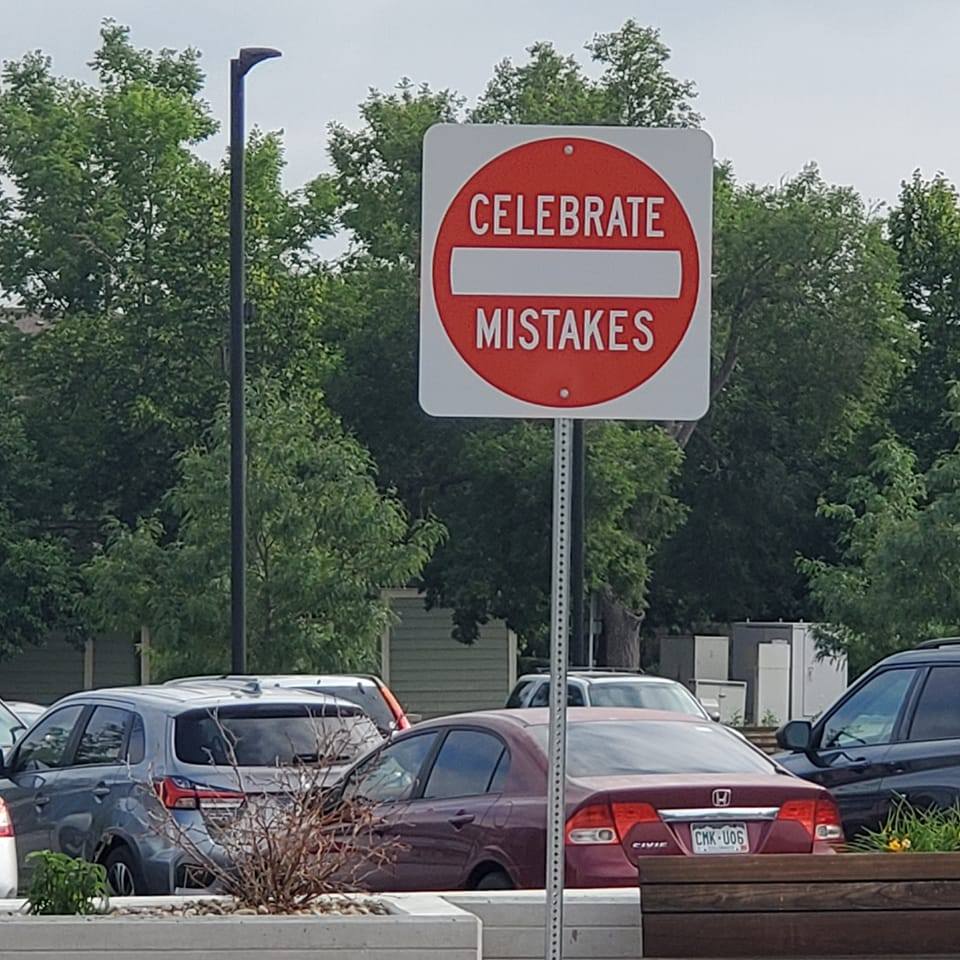
I find myself begging students to turn things in with mistakes, because at least they are not boring. Honest mistakes, not the too-many-fingers mistakes that AI makes.

It comes down to being comfortable enough with oneself to make mistakes and I wonder if that is something we need to emphasize more than how and when to use AI.

theorist vs practioner

I was struck recently by hearing a talk of someone who has worked as an academic most of her life. I also work in academia, but I am a professional in the same field she is a theorist. The disconnect between the two is not always so pronounced, but in this case I felt it. I could ask almost any professional in my field and I would bet they have only a smattering of inclination as to who this theorist is, even though she is a giant in her field.

Day to day, theory makes so little difference to the person who is trying to do the work.

As I work on my dissertation, which is based on practical, day to day, matters, I wonder if more practitioners need to be voicing their reality. The reality for me is that theory does help me in my work, but I think it would be helpful for theorists to know more about the practice, as well. My reality tends to be messy. Did the student worker show up? Can I do some of the more esoteric parts of my job, or do I need to cover the desk?

I wonder if theory would have greater reach if it touched more working lives? Some theories do. The theories of Elfreda Chatman should be widely known and read by anyone working in libraries. It upsets me a little that I was never exposed to her work in my first library degree program.

The arguments about what information really “means” in terms of information literacy are less useful. Let’s get info lit theorists in a library realizing that students cannot distinguish between a journal article online and a webpage because they both have URLs.

Maybe we should have a little more discussion between the theory and the practice. Because as a practitioner who knows a little bit of theory, it shocks me daily how much the PhDs don’t know.

… as resistance

Rest as resistance. Writing as resistance.

I have had some conversations lately about what resistance looks like. Rest as resistance, brought to us by the author Tricia Hersey, encourages napping, daydreaming, thinking complete thoughts.

My advisor suggested a writing as resistance workshop. As some who resists writing, I am not sure that is useful for me, but it started me thinking about all the ways we can resist the coming deluge of right wing madness.

I have often thought that just the act of getting up and going about my day is an act of resistance. I will not be mowed down by the pressures of life. I will be like the willow tree, bending and straightenting, bending and straightening.

These day, just getting up does not feel like enough. And maybe writing is the answer. I am constantly anxious. I worry about social security since I have a disabled adult son who gets survivor benefits. His benefits allow him to pay some rent. Those benefits will help him if something happens to me too soon. I also worry about my trans child and everyone who is the least bit different from the fat white man who golfs on the public dime and decides who lives and dies. I worry that my youngest two will have their education ripped from them.

And sometimes I remember than raising three caring, thinking, brave humans to adulthood, mostly by myself, was also a form of resistance. Which is good, because I can’t ever nap.

AI is boring

I just can’t help but feel that all the AI I encounter as a librarian, as a consumer of media, even as a user of AI, is incredibly boring. The images are repetitive, the language is dull. The worst possible essays are being turned in by students who can’t define many of the words they supposedly wrote.

Is the dullness partly as a result of the sameness of the tech industry that created it? I saw a post today about a tech guy who was surprised his five year old kept turning off an AI toy in order to play with it the way she wanted. He didn’t understand why she wouldn’t interact with it.

But she was interacting with it, just not the way he wanted. AI is about sameness and control. Everyone needs to go back and read Harrison Bergeron again.

The Third Place

Third places play a crucial role in fostering social connections, enhancing community life, promoting mental well-being. A third place is not home or work, but another place you feel comfortable. I have recently found a working space that fits that description.

Third places give people a chance to interact with others who don’t have demands on you. It is a place to build community…a neutral ground for discussion.

These places can also be a source of stress relief. I like the communal working space because the only obligations I have there are to myself and whatever project I’m working on.

Many third spaces are economic enterprises, like coffee shops, or the communal space I have been using. But other such spaces are like churches, where building community and working on community projects is the main goal.

I like to know there is a place I can just be me, and not all the other people I have to be during the day.

Tacit Knowledge

Polanyi famously summarized this concept with the phrase “we know more than we can tell.” This suggests that much of human knowledge and understanding is internalized and personal, making it difficult to transfer or communicate without direct experience.

I am convinced that this very concept is the reason that so much of AI feels alien to us. Humans know more than we can tell. AI knows what it knows. That is also the reason that online education poses such a problem for embodied knowledge. How do you direct the line of a pencil from a thousand miles away.

talent vs practice

When I am knitting in a meeting, or anywhere people can see me, I hear “Oh, you are so talented!” That is not true. When I started knitting, I was terrible! But I never gave up and I have practiced and practiced. Talent and practice represent two distinct but interconnected concepts in the development of skills and abilities.

Talent is often seen as a natural, innate aptitude or a set of abilities that an individual is born with. It can provide a strong foundation and a natural inclination towards certain activities, making the initial learning process quicker or more intuitive.

Practice is the act of repeatedly performing or exercising a skill to improve proficiency. It’s grounded in the belief that consistent, deliberate effort can significantly enhance one’s abilities, even in areas where they may not have inherent talent.

Practice is crucial for the development and refinement of skills. It is through practice that individuals can achieve mastery, regardless of their starting level of talent.

Don’t give up.

Tacit Knowlege

How do we teach through apprenticeship.

Tacit knowledge is implicit and resides in an individual’s subconscious, often rooted in personal experiences and context-specific insights. It is not readily expressed in written or verbal form and remains hidden beneath the surface. Tacit knowledge is highly personal and shaped by an individual’s unique perspectives and skills.

It is primarily gained through hands-on experience, practice, and observation, rather than formal training. Tacit knowledge often involves subjective judgments, gut feelings, and intuitive understanding…art rather than science.

Transferring tacit knowledge to others is difficult because it requires interpersonal interaction, mentorship, apprenticeship, or immersive learning experiences. Examples include a chef’s ability to create a perfect dish without a recipe, a musician’s sense of timing and rhythm. Connoisseurship developed through years of close examination is a form of tacit knowledge.

Tacit knowledge complements explicit knowledge, forming a comprehensive knowledge base within individuals and organizations. Sharing tacit information is often not part of the curriculum, and yet is an essential teaching goal.

Essential Questions

“Essential questions” are broad, thought-provoking inquiries that sit at the core of a discipline or subject. These questions cannot be answered with a mere definition and require thinking, reflection, and discussion. Essential questions help steer inquiry and exploration of a topic and are used in instructional design to drive the writing of a lesson.

Essential questions are open-ended, thought provoking, relevant to a discipline or area of study. They are cross-disciplinary and thrive to be timeless.

In the development of information literacy competencies for Art, Architecture, and Design, ARLIS/NA identified a number of essential questions.

There are a few that really stood out to me:

  • How are the creative and research processes intertwined and informed by one another in your discipline? For you personally?
  • How are your research questions grounded in the existing state of topical knowledge, unsolved problems, and personal experience?
  • What role does personal experience and understanding play in the research and creative process?

These were just a few of the questions that led to the listed competencies. We are always talking about SMART goals, and the competencies are definitely along the lines of SMART goals — can the learner identify a source, etc. The essential questions seem…more airy…less precise, but they are also more interesting.

In order to really know what is happening in the art classroom, maybe going back to the essential questions is the way to go.